The Brown PLT Blog

Articles by tag: Formal Methods
LTL Tutor
Differential Analysis: A Summary
Forge: A Tool to Teach Formal Methods
Generating Programs Trivially: Student Use of Large Language Models
Automated, Targeted Testing of Property-Based Testing Predicates
Teaching and Assessing Property-Based Testing
User Studies of Principled Model Finder Output
Lightweight Diagramming for Lightweight Formal Methods
Tags: Formal Methods, Tools, Verification, Visualization
Posted on 09 June 2025.Formal methods tools like Alloy and Forge help users define, explore, verify, and diagnose specifications for complex systems incrementally. A crucial feature of these tools is their visualizer, which lets users explore generated models through graphical representations.
In some cases, they suffer from familiar usability issues—such as overlapping lines, unclear labels, or cluttered layouts—that make it hard to understand what the model represents. But even when the diagrams are clean and well-organized, they can still be confusing if the layout doesn’t reflect the structure that users expect.
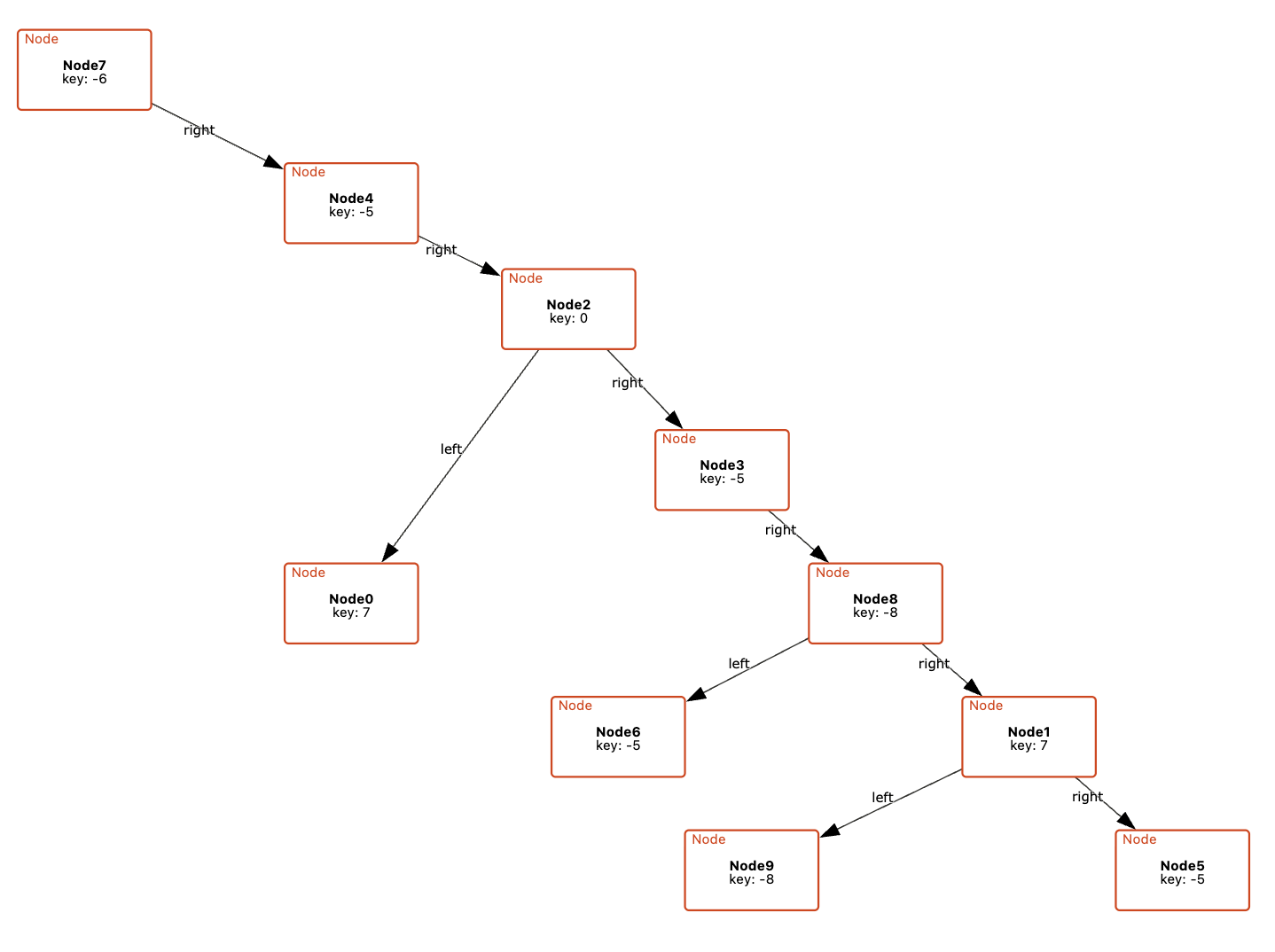
For example, a visualization of a binary tree might place left and right children arbitrarily, rather than arranging them to the left and right of their parent node. This breaks with common conventions and can make it harder for users to quickly recognize familiar structures. Similarly, if a model is meant to convey a specific organization (e.g., the grouping of files in a directory) but the visualization fails to reflect this, it becomes difficult to discern the intended relationships, making the model harder to interpret and reason about.
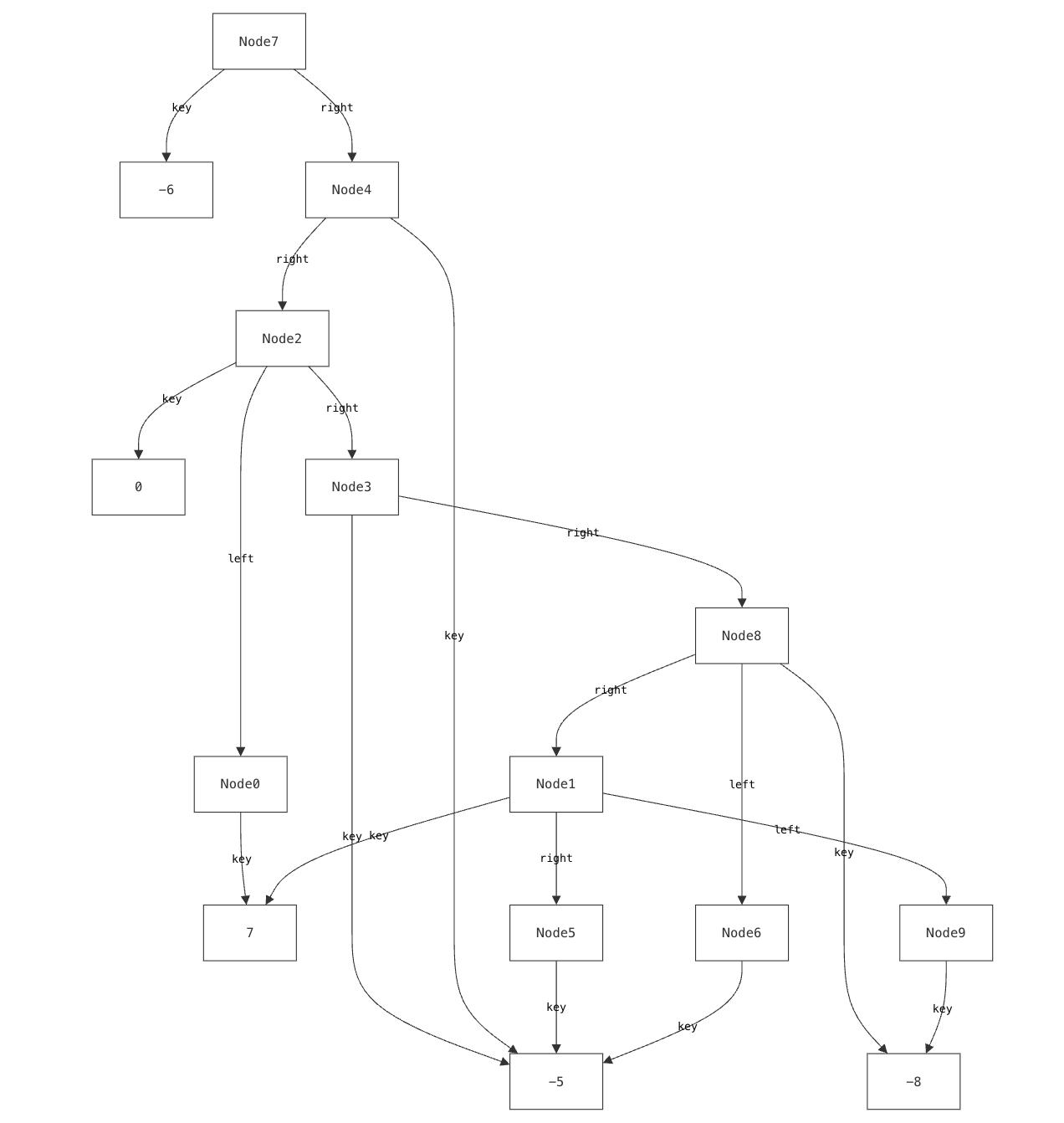
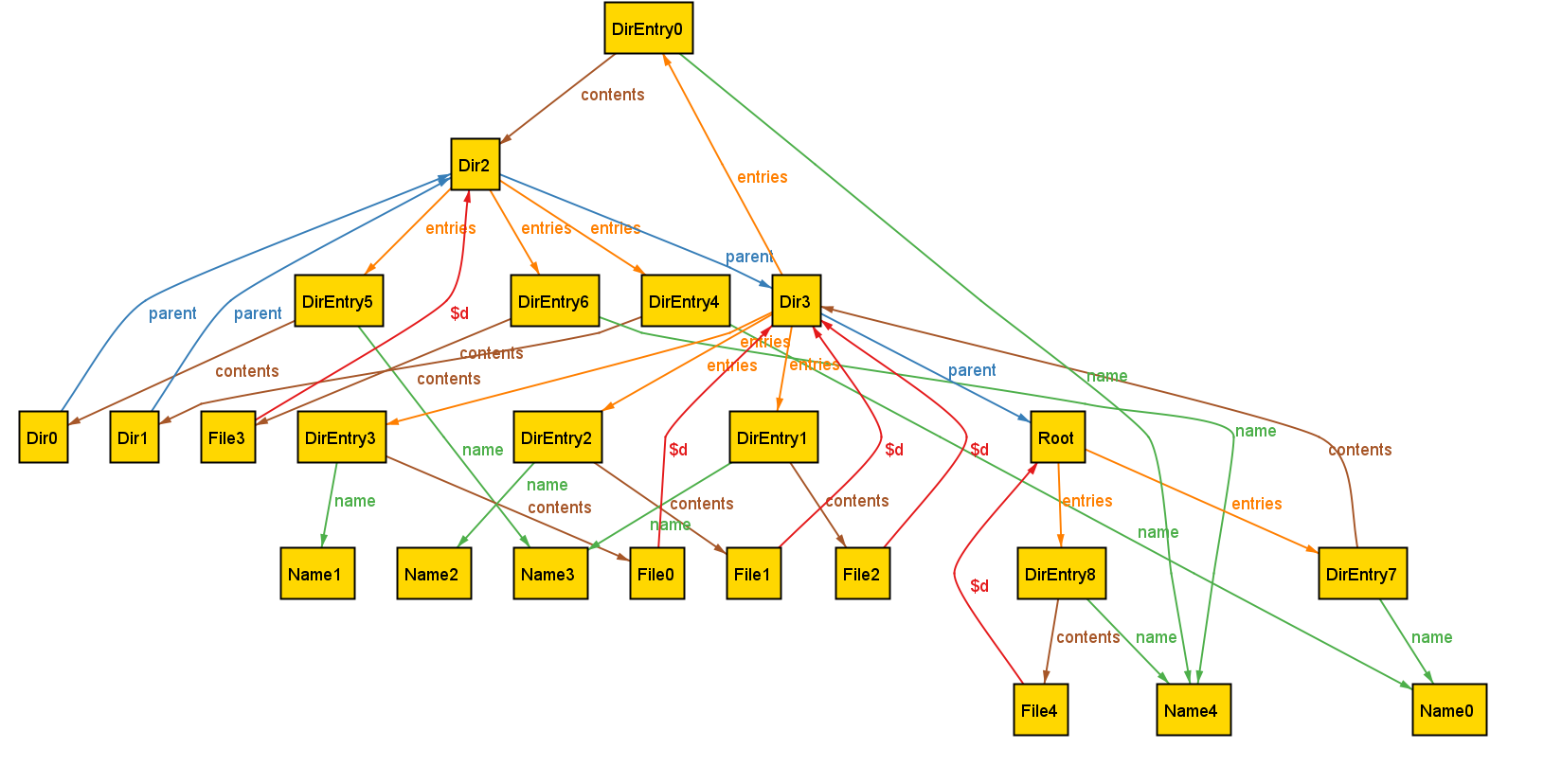
Our previous research has explored using custom, domain-specific visualizations to address this challenge. Yet existing tools for custom visualization come with several significant drawbacks:
- Users must learn and use entirely different languages to create custom visualizations, learning skills (like CSS) that have nothing to do with formal modeling.
- The level of detail required by these languages (such as controlling how elements are rendered) often makes the visualizer code larger and more complex than the models themselves.
- Most critically, these visualizations can be brittle. While careful visualization design can handle certain edge cases, they are inherently limited by their authors’ assumptions about potential issues. The very “unknown unknowns” that lightweight formal methods exist to help surface are often masked by visualizers.
We encountered this issue even when building visualizations for relatively simple data structures that we understand well. It is well-documented that experts suffer from blind spots about what mistakes students might make. When faced with such a modeling mistake, failing to specify that a node’s left and right children must be distinct, our custom visualizer failed silently.
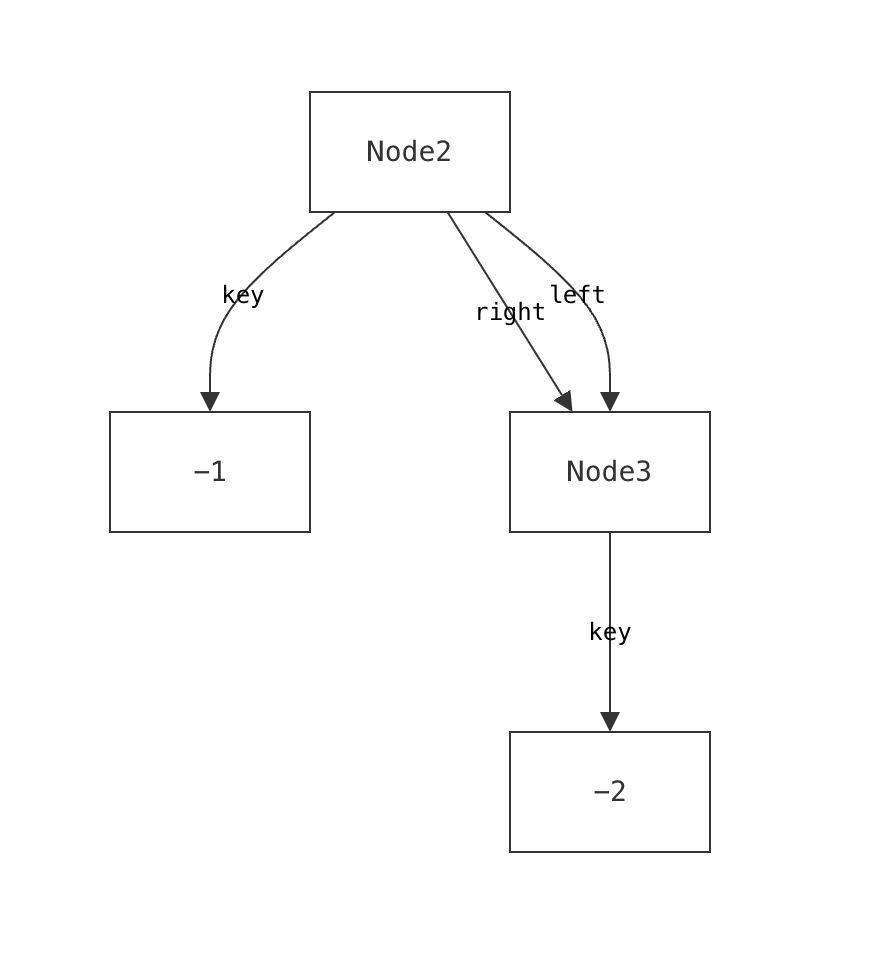
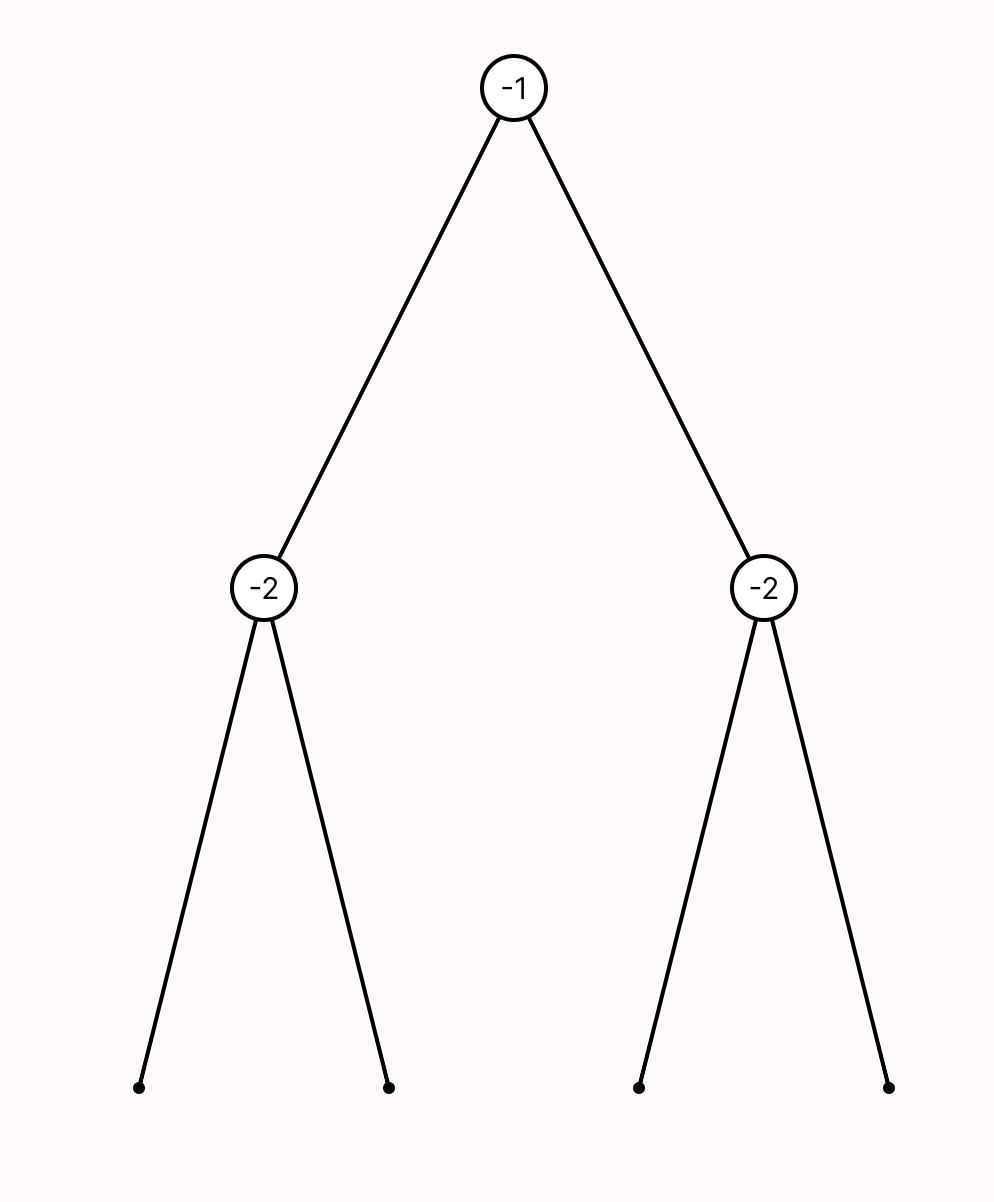
Such failures aren’t merely aesthetic—they actively prevent users from discovering a specification error.
Cope and Drag (or CnD) is a novel lightweight diagramming language built to address these issues. CnD’s design was driven by two approaches:
- A top-down exploration of cognitive science principles that influence spatial reasoning, visualization, and diagramming.
- A bottom-up analysis that distills patterns from dozens of actual custom visualizations.
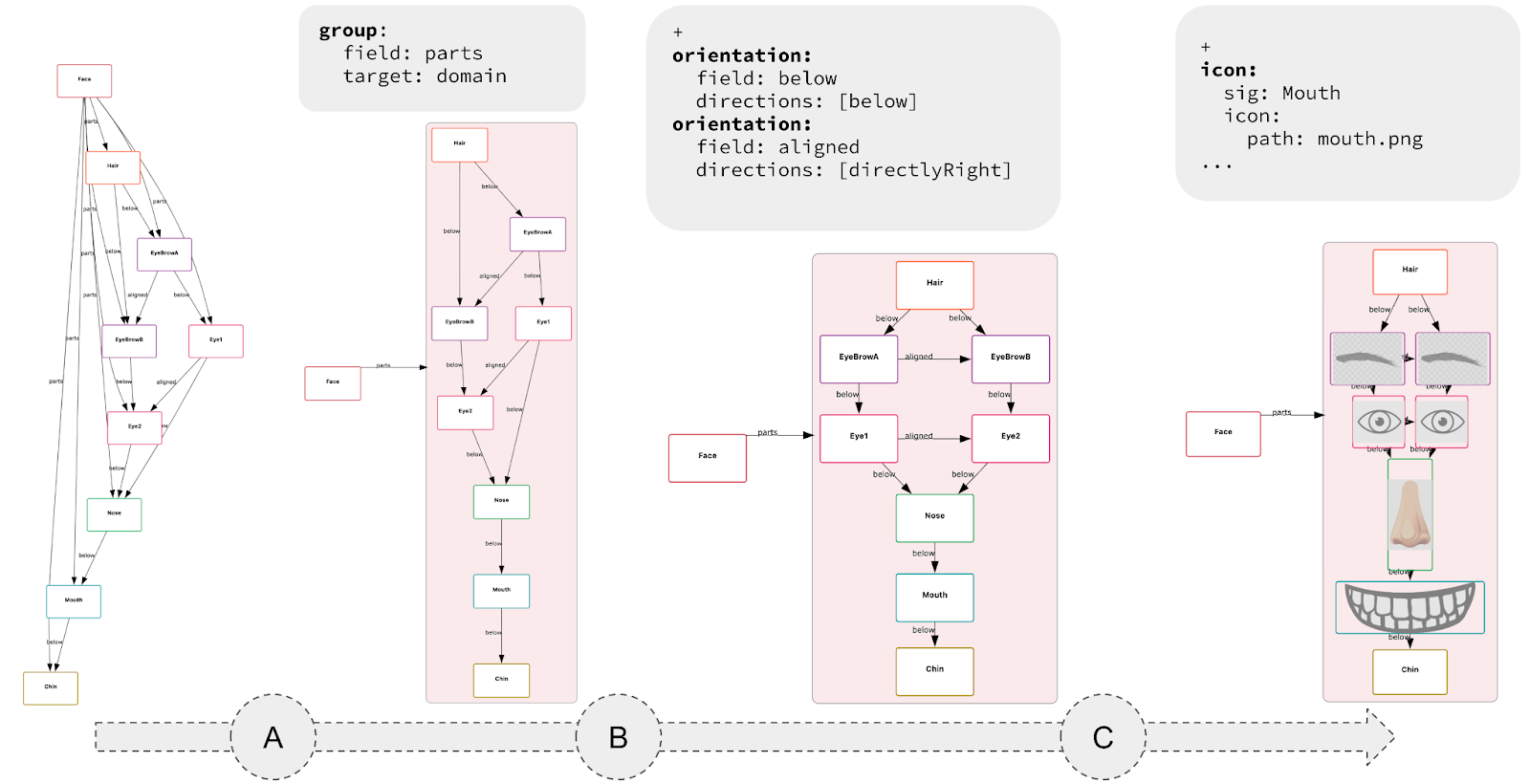
The resulting language is small, requires minimal annotation, and can be used incrementally. The key idea is that each CnD operation meaningfully refines the default visualization. These operations include constraining spatial layout (such as positioning child nodes below their parents in a binary tree), grouping elements (like clustering related components in a software architecture), and directing drawing style (for instance, coloring nodes in a red-black tree based on their color).
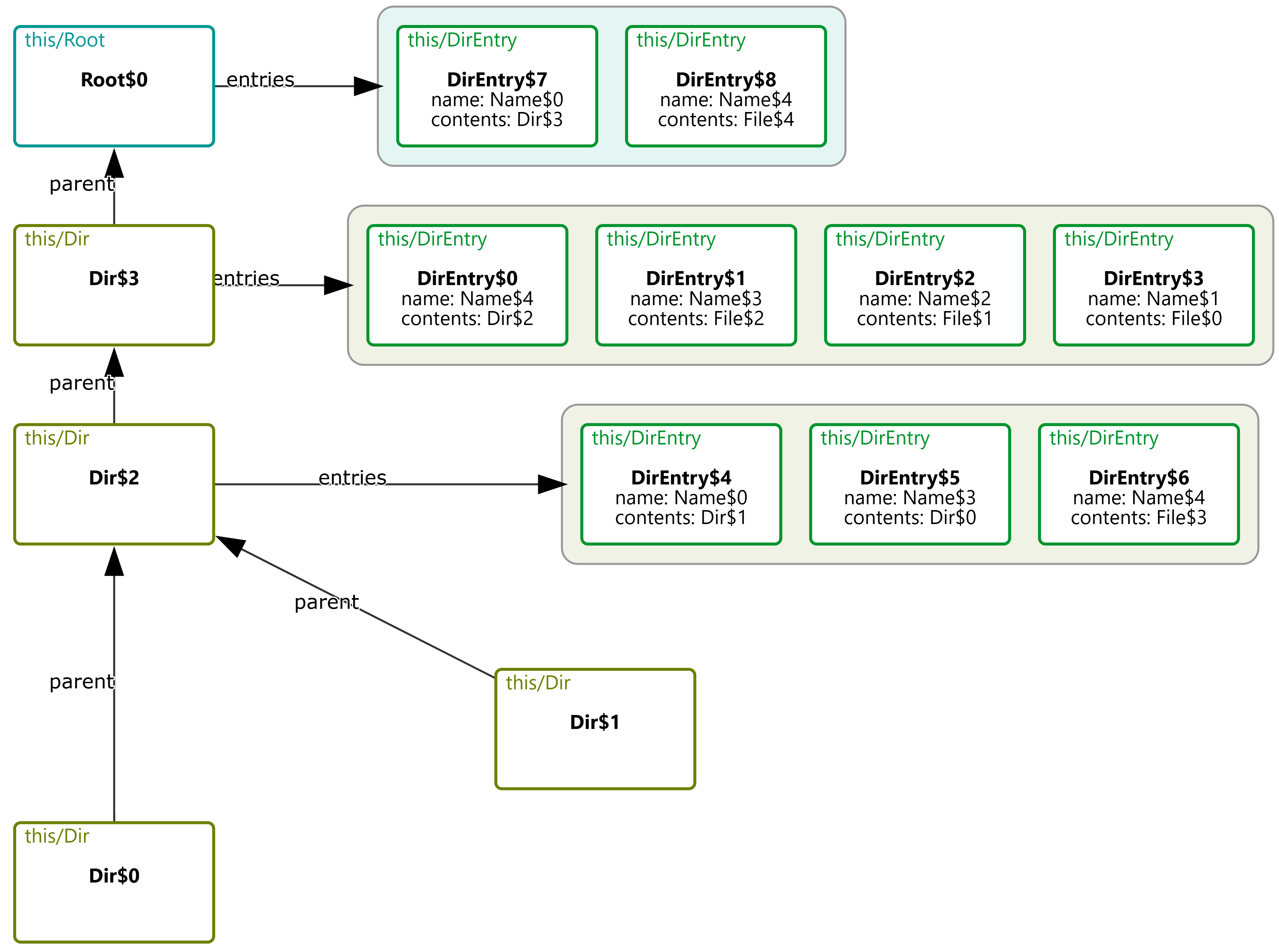
Rather than prioritizing aesthetics, CnD focuses on encoding the spatial intuitions implicit in communicating the model. Its lightweight, declarative structure captures these relationships directly.
-
Lightweight Specs, Not Programs: Diagramming with CnD resembles writing a spec, not coding a full program. An empty spec yields a default diagram; each constraint refines it. Unlike traditional viz tools like D3 (where you don’t get a visualization until you’ve written a full program) CnD supports incremental visualization, making it easy to start and evolve alongside your model.
- Useful, not pretty: Generated diagrams may lack the visual polish of more sophisticated tools, but they prioritize structural clarity and correctness over style.The trade-off is a lower ceiling: user’s have less fine-grained control over how diagram elements are rendered (e.g., spacing, fonts, shapes).
-
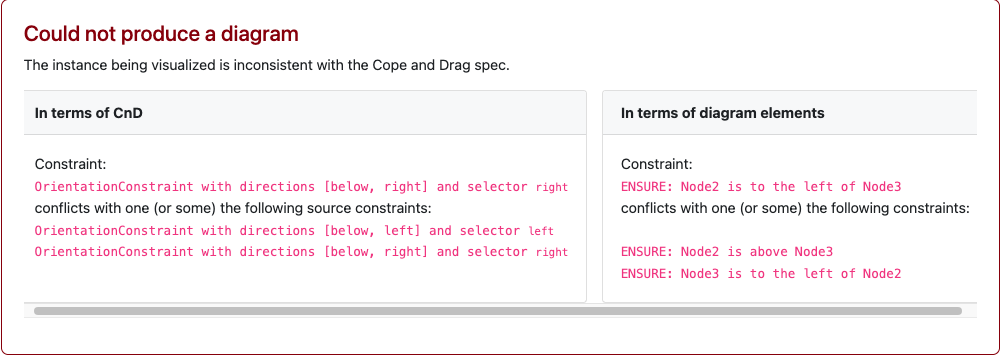
Fail Loudly: CnD constraints are hard constraints. When a diagram fails to match the model, the system prevents visualization and produces a solver-generated error.
For instance, a CnD specification for a binary tree might encode tree layouts as two constraints (lay the left child below and to the left of its parent, and the right child below and to the right of the parent). When faced with the DAG described earlier, CnD identifies that these visualization constraints are unsatisfiable, and produces an error message instead of a misleading diagram.
CnD isn’t the final word on diagramming. It’s one design point in a larger landscape, trading visual polish for ease of use, structural clarity, and exploration of model-diagram mismatches. Other tools will (and should) explore different trade-offs.
CnD is embedded in an open-source visualizer for Forge. We encourage you to try it as part of your existing Forge workflows. To learn more about CnD, please read our paper!
LTL Tutor
Tags: Linear Temporal Logic, Education, Formal Methods, Misconceptions, Properties, Tools, Verification
Posted on 08 August 2024.We have been engaged in a multi-year project to improve education in Linear Temporal Logic (LTL) [Blog Post 1, Blog Post 2]. In particular, we have arrived at a detailed understanding of typical misconceptions that learners and even experts have. Our useful outcome from our studies is a set of instruments (think “quizzes”) that instructors can deploy in their classes to understand how well their students understand the logic and what weaknesses they have.
However, as educators, we recognize that it isn’t always easy to add new materials to classes. Furthermore, your students make certain mistakes—now what? They need explanations of what went wrong, need additional drill problems, and need checks whether they got the additional ones right. It’s hard for an educator to make time for all that. And if one is an independent learner, they don’t even have access to such educators.
Recognizing these practical difficulties, we have distilled our group’s expertise in LTL into a free online tutor:
We have leveraged insights from our studies to create a tool designed to be used by learners with minimal prior instruction. All you need is a brief introduction to LTL (or even just propositional logic) to get started. As an instructor, you can deliver your usual lecture on the topic (using your preferred framing), and then have your students use the tool to grow and to reinforce their learning.
In contrast to traditional tutoring systems, which are often tied to a specific curriculum or course, our tutor adaptively generates multiple-choice question-sets in the context of common LTL misconceptions.
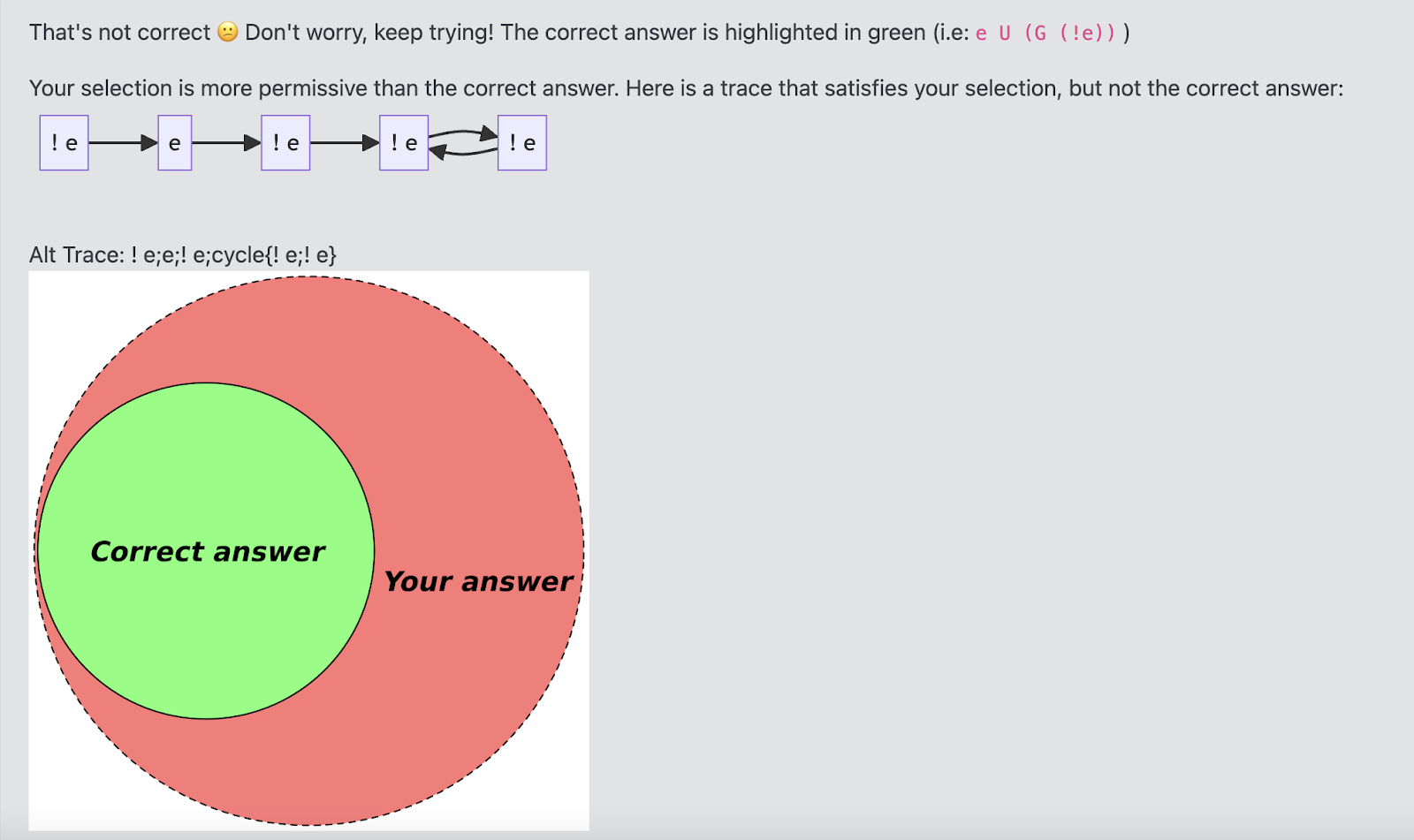
- The tutor provides students who get a question wrong with feedback in terms of their answer’s relationship to the correct answer. Feedback can take the form of visual metaphors, counterexamples, or an interactive trace-stepper that shows the evaluation of an LTL formula across time.
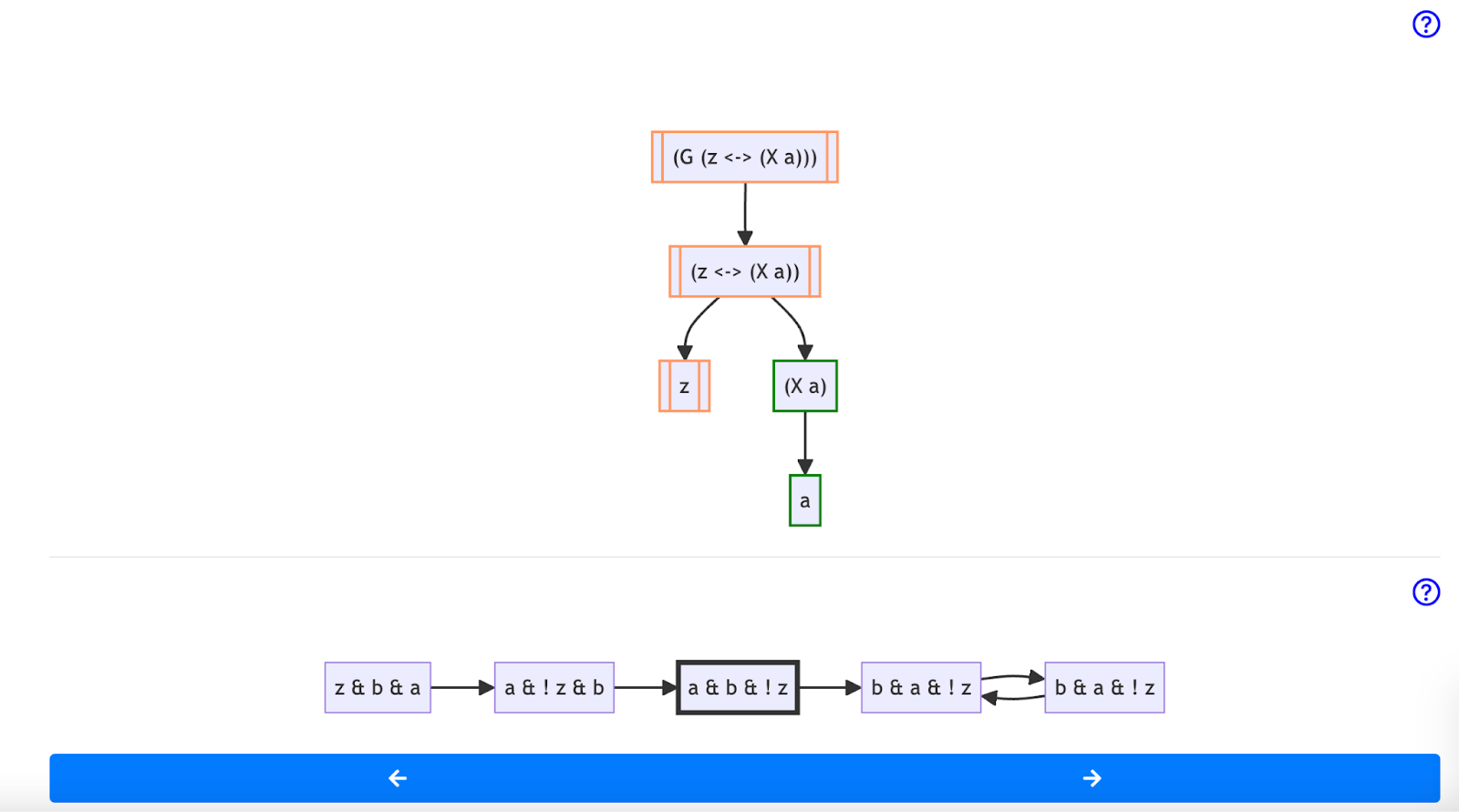
(G (z <-> X(a))) in the third state of a trace. While the overall formula is not satisfied at this moment in time, the sub-formula (X a) is satisfied. This allows learners to explore where their understanding of a formula may have diverged from the correct answer.
- If learners consistently demonstrate the same misconception, the tutor provides them further insight in the form of tailored text grounded in our previous research.
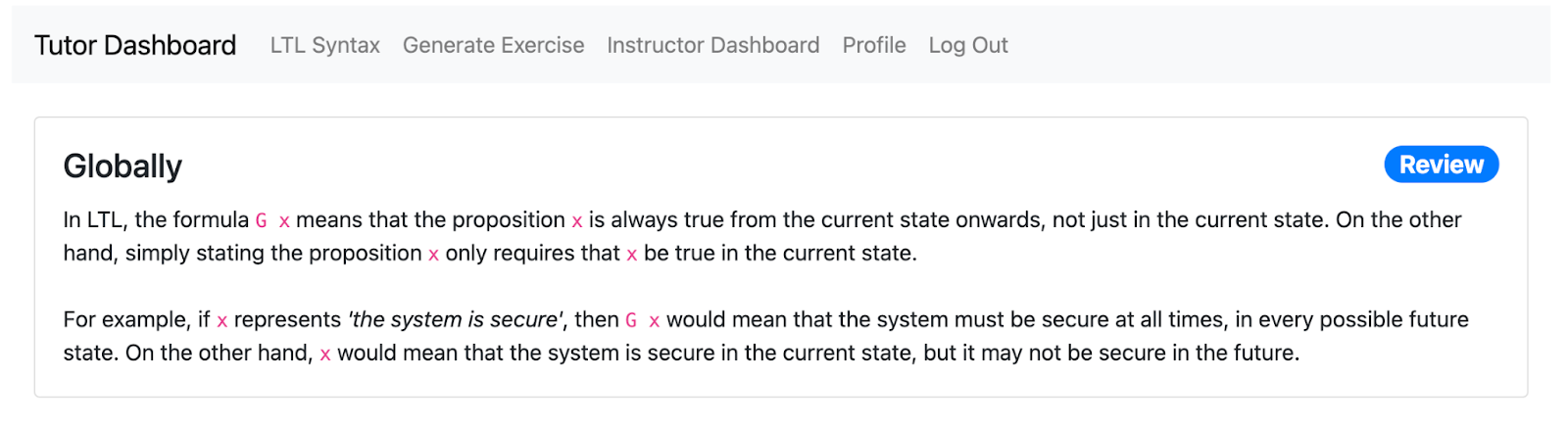
- Once it has a history of misconceptions exhibited by the student, the tutor generates novel, personalized question sets designed to drill students on their specific weaknesses. As students use the tutor, the system updates its understanding of their evolving needs, generating question sets to address newly uncovered or pertinent areas of difficulty.
We also designed the LTL Tutor with practical instructor needs in mind:
- Curriculum Agnostic: The LTL Tutor is flexible and not tied to any specific curriculum. You can seamlessly integrate it into your existing course without making significant changes. It both generates exercises for students and allows you to import your own problem sets.
- Detailed Reporting: To track your class’s progress effectively, you can create a unique course code for your students to enter, so you can get detailed insights into their performance.
- Self-Hostable: If you prefer to have full control over your data, the LTL Tutor can easily be self-hosted.
To learn more about the Tutor, please read our paper!
Differential Analysis: A Summary
Tags: Differential Analysis, Formal Methods, Properties, Verification
Posted on 27 June 2024.For multiple decades we have worked on a the problem of differential analysis. This post explains where it comes from, what it means, and what its consequences are.
Context: Verification
For decades, numerous researchers have worked on the problem of verification. To a first approximation, we can describe this problem as follows:
That is, checking whether some program P satisfies some property ɸ. There have been many productive discussions about exactly what methods we should use, but this remains the fundamental question.
Starting in around 2004, we started to build tools to verify a variety of interesting system descriptions (the Ps), starting with access-control policies. They could also be security policies, network configurations, and more. We especially recognized that many of these system descriptions are (sufficiently) sub-Turing-complete, which means we can apply rich methods to precisely answer questions about them. That is, there is a rich set of problems we can verify.
The Problem
Attractive as this idea is, it runs into a significant problem in practice. When you speak to practitioners, you find that they are not short of system descriptions (Ps), but they are severely lacking in properties (ɸs). The problem is not what some might imagine — that they can’t express their properties in some precise logic (which is a separate problem!) — but rather that they struggle to express non-trivial properties at all. A typical conversation might go like:
- We have a tool for verification!
- Nice, what does it do?
- It consumes system descriptions of the kind you produce!
- Oh, that’s great!
- You just need to specify your properties.
- My what?
- Your properties! What you want your system to do!
- I don’t have any properties!
- But what do you want the system to do?
- … Work correctly?
This is not to mock practitioners: not at all. Quite the contrary! Even formal methods experts would struggle to precisely describe the expected behavior of complex systems. In fact, talk to formal methods researchers long enough and they’ll admit knowing that this is a problem. It’s just not something we like to think about.
An Alternative
In fact, the “practitioner” answer shows us the path forward. What does it mean for a system to “work”? How does a system’s maintainer know that it “works”?
As a practical matter, many things help us confirm that a system is working well enough. We might have some test suites, we might have monitoring of its execution, we observe it run and use it; lots of people are using it every day; we might even have verified a few properties of a few parts! The net result is that we have confidence in a system.
And then, things happen! Typically, one of two things:
- We find a bug, and need to fix it.
- We modify an existing feature or add a new one (or — all too rarely — remove one!).
So the problem we run into is the following:
in the old version to the new one?
Put differently, the core of formal methods is checking for compatibility between two artifacts. Traditionally, we have a system description (P) and a property (ɸ); these are meant to be expressed independent of one another, so that compatibility gives us confidence and incompatibility indicates an error. But now we have two different artifacts: an old system (call it P) and a new one (call it P’). These are obviously not going to be the same (except in rare cases; see below), but broadly, we want to know, how are they different?
Of course, what we care about is not the syntactic difference, but the semantic change. Large syntactic differences may have small semantic ones and vice versa.
Defining the Difference
Computing the semantic difference is often not easy. There is a long line of work of computing the difference of programs. However, it is difficult for Turing-complete languages; it is also not always clear what the type of the difference should be. Computing it is a lot easier when the language is sub-Turing-complete (as our papers show). The question of exactly what a “difference” is is also interesting.
Many of the system description languages we have worked with tend to be of the form Request ⇒ Response. For instance, an access control policy might have the type:
(In practice, policy languages can be much richer, but this suffices for illustration.) So what is the type of the difference? It maps every request to the cross-product of responses:
That is: some requests that used to be accepted still are; some that were denied still are; but some that were accepted are now deined, and some that were denied are now accepted. (This assumes the domains are exactly the same; otherwise some requests that previously produced a decision no longer do, and vice versa. We’ll assume you can work out the details of domains with bottom values.) The difference is of course the requests whose outcomes change: in this case,
Using the Difference
Depending on how we compute the difference, we can treat the difference essentially as a database. That is, it is a set of pairs of request and change-of-response. The database perspective is very productive, because we can do many things with this database:
- Queries: What is the set of requests whose decisions go from Deny↦Accept? These are places where we might look for data leaks.
- Views: What are all the requests whose decisions go from Accept↦Deny? These are all the requests that lost access. We might then want to perform queries over this smaller database: e.g., who are the entities whose requests fall in it?
And perhaps most surprisingly:
- Verification: Confirm that as a result of this change, certain entities did not gain access.
In our experience, administrators who would not be able to describe properties of their system can define properties of their changes. Indeed, classical verification even has a name for some such properties: they’re called “frame conditions”, and mean, in effect, “and nothing else changed”. Here, we can actually check for these. It’s worth noting that these properties are not true of either the old or new systems! For instance, certain individuals may have had privileges before and will have them after the alteration; all we’re checking is that their privileges did not change.
Uses
Having a general “semantic difference engine”, and being able to query it (interactively), is very powerful. We can perform all the operations we have described above. We can use it to check the consequences of an intended edit. In some rare cases, we expect the difference to be empty: e.g., when we refactor the policy to clean it up syntactically, but expect that the refactoring had no semantic impact. Finally, a semantic differencing engine is also useful as an oracle when performing mutation testing, as Martin and Xie demonstrated.
A Cognitive Perspective
We think there are a few different, useful framings of differential analysis.
One might sound like a truism: we’re not very good at thinking about the things that we didn’t think about. That is, when we make a change to the system, there was some intent behind the change; but it can be very difficult to determine all the consequences of that change. Our focus on the intended change can easily blind us thinking through the consequences. Overcoming these blind spots is very difficult for humans. A semantic differential analysis engine lays them bare.
Another is that we lack good tools to figure out what the properties of a system should be. Model-exploration tools (such as Alloy, or our derivative of it, Forge) are useful at prompting people to think about how they expect systems to behave and not behave. Differential output can also be such a spur: in articulating why something should or should not happen with a change, we learn more about the system itself.
Finally, it’s worth distinguishing the different conditions that lead to system changes. When working on features, we can often do so with some degree of flexibility. But when fixing bugs, we’re often in a hurry: we need to make a change to immediately block, say, a data leakage. If we’re being principled, we might add some tests to check for the intended behavior (and perhaps also to avoid regression); but at that moment, we are likely to be in an especially poor shape to think through unintended consequences. Differential analysis serves as an aid in preventing fixing one problem introducing another.
Readings
Here are some of our papers describing differential analysis (which we have also called “change-impact analysis” in the past):
Forge: A Tool to Teach Formal Methods
Tags: Education, Formal Methods, Properties, Tools, User Studies, Verification, Visualization
Posted on 21 April 2024.For the past decade we have been studying how best to get students into formal methods (FM). Our focus is not on the 10% or so of students who will automatically gravitate towards it, but on the “other 90%” who don’t view it as a fundamental part of their existence (or of the universe). In particular, we decided to infuse FM thinking into the students who go off to build systems. Hence the course, Logic for Systems.
The bulk of the course focuses on solver-based formal methods. In particular, we began by using Alloy. Alloy comes with numerous benefits: it feels like a programming language, it can “Run” code like an IDE, it can be used for both verification and state-exploration, it comes with a nice visualizer, and it allows lightweight exploration with gradual refinement.
Unfortunately, over the years we have also run into various issues with Alloy, a full catalog of which is in the paper. In response, we have built a new FM tool called Forge. Forge is distinguished by the following three features:
-
Rather than plunging students into the full complexity of Alloy’s language, we instead layer it into a series of language levels.
-
We use the Sterling visualizer by default, which you can think of as a better version of Alloy’s visualizer. But there’s much more! Sterling allows you to craft custom visualizations. We use this to create domain-specific visualizations. As we show in the paper, the default visualization can produce unhelpful, confusing, or even outright misleading images. Custom visualization takes care of these.
-
In the past, we have explored property-based testing as a way to get students on the road from programming to FM. In turn, we are asking the question, “What does testing look like in this FM setting?” Forge provides preliminary answers, with more to come.
Just to whet your appetite, here is an example of what a default Sterling output looks like (Alloy’s visualizer would produce something similar, with fewer distinct colors, making it arguably even harder to see):
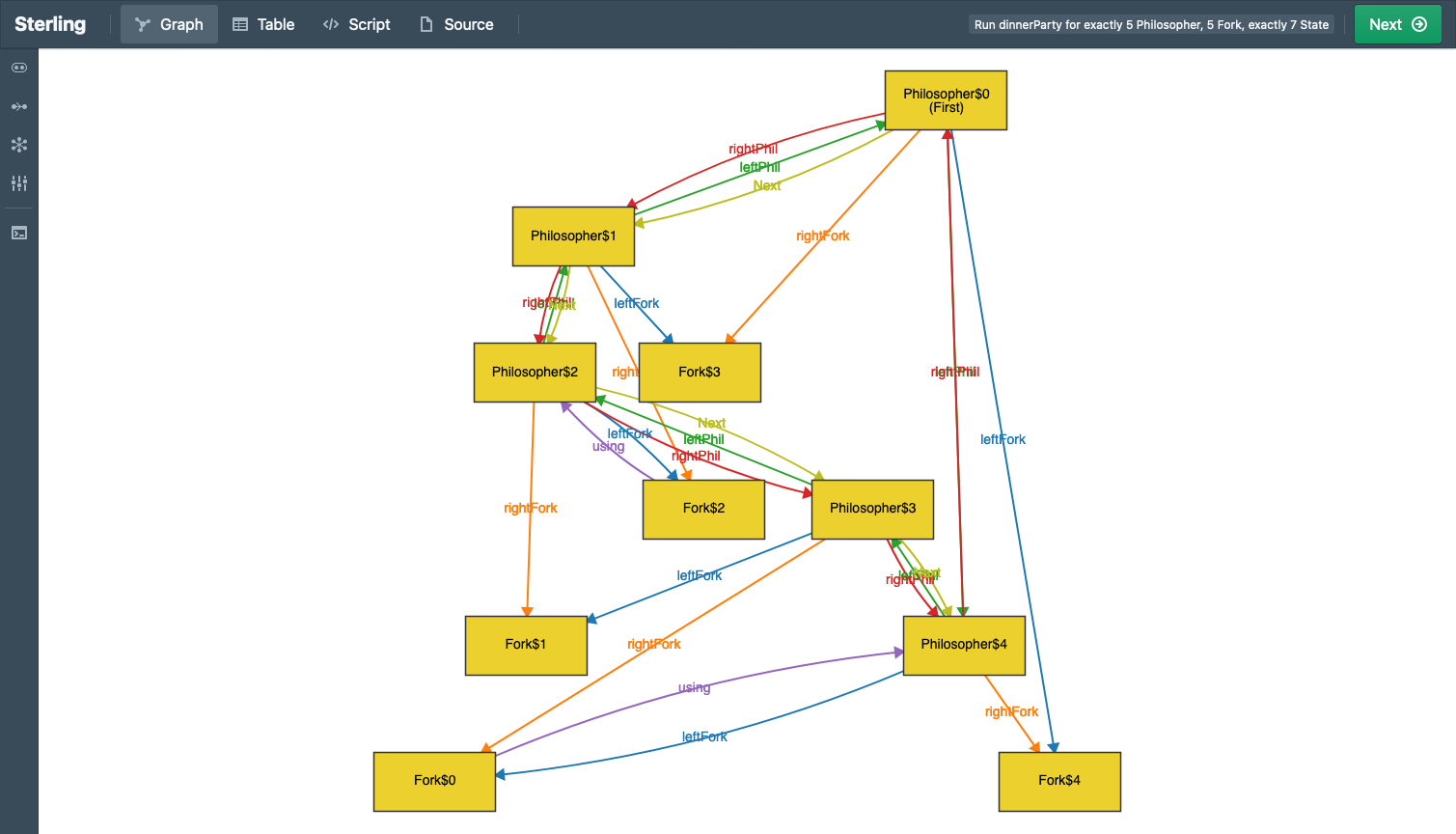
Here’s what custom visualization shows:
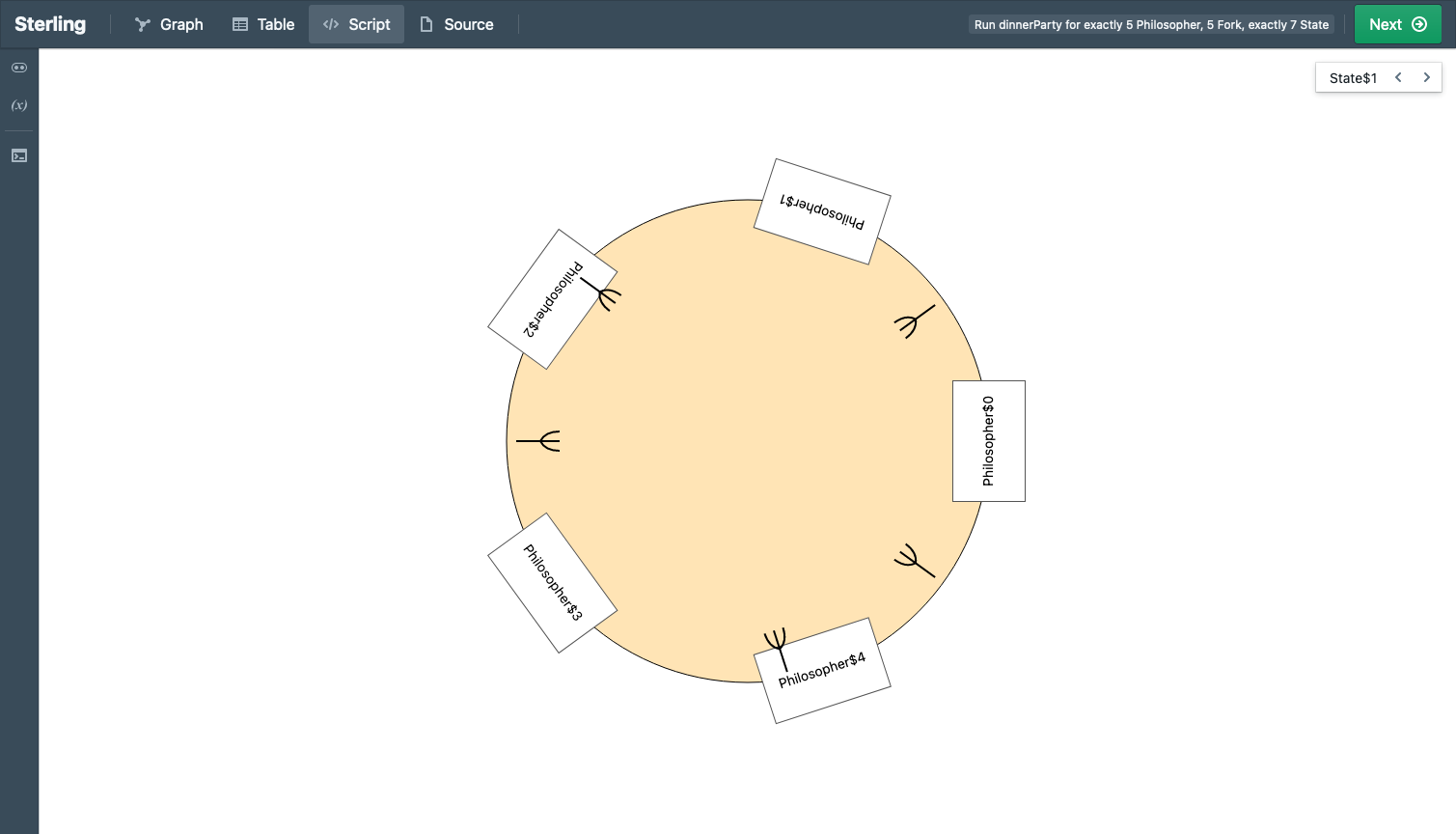
See the difference?
For more details, see the paper. And please try out Forge!
Acknowledgements
We are grateful for support from the U.S. National Science Foundation (award #2208731).
Generating Programs Trivially: Student Use of Large Language Models
Tags: Large Language Models, Education, Formal Methods, Properties, Testing, User Studies
Posted on 19 September 2023.The advent of large language models like GPT-3 has led to growing concern from educators about how these models can be used and abused by students in order to help with their homework. In computer science, much of this concern centers on how LLMs automatically generate programs in response to textual prompts. Some institutions have gone as far as instituting wholesale bans on the use of the tool. Despite all the alarm, however, little is known about whether and how students actually use these tools.
In order to better understand the issue, we gave students in an upper-level formal methods course access to GPT-3 via a Visual Studio Code extension, and explicitly granted them permission to use the tool for course work. In order to mitigate any equity issues around access, we allocated $2500 in OpenAI credit for the course, enabling free access to the latest and greatest OpenAI models.
Can you guess the total dollar value of OpenAI credit used by students?
We then analyzed the outcomes of this intervention, how and why students actually did and did not use the LLM.
Which of these graphs do you think best represents student use of GPT models over the semester?
When surveyed, students overwhelmingly expressed concerns about using GPT to help with their homework. Dominant themes included:
- Fear that using LLMs would detract from learning.
- Unfamiliarity with LLMs and issues with output correctness.
- Fear of breaking course rules, despite being granted explicit permission to use GPT.
Much ink has been spilt on the effect of LLMs in education. While our experiment focuses only on a single course offering, we believe it can help re-balance the public narrative about such tools. Student use of LLMs may be influenced by two opposing forces. On one hand, competition for jobs may cause students to feel they must have “perfect” transcripts, which can be aided by leaning on an LLM. On the other, students may realize that getting an attractive job is hard, and decide they need to learn more in order to pass interviews and perform well to retain their positions.
You can learn more about the work from the paper.
Automated, Targeted Testing of Property-Based Testing Predicates
Tags: Formal Methods, Properties, Testing, Verification
Posted on 24 November 2021.Property-Based Testing (PBT) is not only a valuable sofware quality improvement method in its own right, it’s a critical bridge between traditional software development practices (like unit testing) and formal specification. We discuss this in our previous work on assessing student performance on PBT. In particular, we introduce a mechanism to investigate how they do by decomposing the property into a collection of independent sub-properties. This gives us semantic insight into how students perform: rather than a binary scale, we can identify specific sub-properties that they may have difficulty with.
While this preliminary work was very useful, it suffered from several problems, some of which are not surprising while others became clear to us only in retrospect. In light of that, our new work makes several improvements.
-
The previous work expected each of the sub-properties to be independent. However, this is too strong a requirement. For one, it masks problems that can lurk in the conjunction of sub-properties. The other problem is more subtle: when you see a surprising or intriguing student error, you want to add a sub-property that would catch that error, so you can generate statistics on it. However, there’s no reason the new property will be independent; in fact, it almost certainly won’t be.
-
Our tests were being generated by hand, with one exception that was so subtle, we employed Alloy to find the test. Why only once? Why not use Alloy to generate tests in all situations? And while we’re at it, why not also use a generator from a PBT framework (specifically, Hypothesis)?
-
And if we’re going to use both value-based and SAT-based example generators, why not compare them?
This new paper does all of the above. It results in a much more flexible, useful tool for assessing student PBT performance. Second, it revisits our previous findings about student performance. Third, it lays out architectures for PBT evaluation using SAT and a PBT-generator (specifically Hypothesis). In the process it explains various engineering issues we needed to address. Fourth, it compares the two approaches; it also compares how the two approaches did relative to hand-curated test suites.
You can read about all this in our paper.
Teaching and Assessing Property-Based Testing
Tags: Education, Formal Methods, Properties, Testing, User Studies
Posted on 10 January 2021.Property-Based Testing (PBT) sees increasing use in industry, but lags significantly behind in education. Many academics have never even heard of it. This isn’t surprising; computing education still hasn’t come to terms with even basic software testing, even when it can address pedagogic problems. So this lag is predictable.
The Problem of Examples
But even people who want to use it often struggle to find good examples of it. Reversing a list drives people to drink, and math examples are hard to relate to. This is a problem from several respects. Without compelling examples, nobody will want to teach it. Even if they do, unless the examples are compelling, students will not pay attention to it. And if the students don’t, they won’t recognize opportunities to use it later in their careers.
This loses much more than a testing technique. We consider PBT a gateway to formal specification. Like a formal spec, it’s an abstract statement about behaviors. Unlike a formal spec, it doesn’t require learning a new language or mathematical formalism, it’s executable, and it produces concrete counter-examples. We therefore use it, in Brown’s Logic for Systems course, as the starting point to more formal specifications. (If they learn nothing about formal specification but simply become better testers, we’d still consider that a win.)
Therefore, for the past 10 years, and with growing emphasis, we’ve been teaching PBT: starting in our accelerated introductory course, then in Logic for Systems, and gradually in other courses as well. But how do we motivate the concept?
Relational Problems
We motivate PBT through what we call relational problems. What are those?
Think about your typical unit test. You write an input-output
pair: f(x) is y. Let’s say it fails:
-
Usually, the function
fis wrong. Congrats, you’ve just caught a bug! -
Sometimes, the test is wrong:
f(x)is not, in fact,y. This can take some reflection, and possibly reveals a misunderstanding of the problem.
That’s usually where the unit-testing story ends. However, there is one more possibility:
- Neither is “wrong”.
f(x)has multiple legal results,w,y, andz; your test chosey, but this particular implementation happened to returnzorwinstead.
We call these “relational” because f is clearly more a relation than
a function.
Some Examples
So far, so abstract. But many problems in computing actually have a relational flavor:
-
Consider computing shortest paths in a graph or network; there can be many shortest paths, not just one. If we write a test to check for one particular path, we could easily run into the problem above.
-
Many other graph algorithms are also relational. There are many legal answers, and the implementation happens to pick just one of them.
-
Non-deterministic data structures inspire relational behavior.
-
Various kinds of matching problems—e.g., the stable-marriage problem—are relational.
-
Combinatorial optimization problems are relational.
-
Even sorting, when done over non-atomic data, is relational.
In short, computing is full of relational problems. While they are not at all the only context in which PBT makes sense, they certainly provide a rich collection of problems that students already study that can be used to expose this idea in a non-trivial setting.
Assessing Student Performance
Okay, so we’ve been having students write PBT for several years now. But how well do they do? How do we go about measuring such a question? (Course grades are far too coarse, and even assignment grades may include various criteria—like code style—that are not strictly germane to this question.) Naturally, their core product is a binary classifier—it labels a purported implementation as valid or invalid—so we could compute precision and recall. However, these measures still fail to offer any semantic insight into how students did and what they missed.
We therefore created a new framework for assessing this. To wit, we took each problem’s abstract property statement (viewed as a formal specification), and sub-divided it into a set of sub-properties whose conjunction is the original property. Each sub-property was then turned into a test suite, which accepted those validators that enforced the property and rejected those that did not. This let us get a more fine-grained understanding of how students did, and what kinds of mistakes they made.
Want to Learn More?
If you’re interested in this, and in the outcomes, please see our paper.
What’s Next?
The results in this paper are interesting but preliminary. Our follow-up work describes limitations to the approach presented here, thereby improving the quality of evaluation, and also innovates in the generation of classifying tests. Check it out!
User Studies of Principled Model Finder Output
Tags: Crowdsourcing, Formal Methods, User Studies, Verification, Visualization
Posted on 01 July 2017.For decades, formal-methods tools have largely been evaluated on their correctness, completeness, and mathematical foundations while side-stepping or hand-waving questions of usability. As a result, tools like model checkers, model finders, and proof assistants can require years of expertise to negotiate, leaving knowledgeable but uninitiated potential users at a loss. This state of affairs must change!
One class of formal tool, model finders, provides concrete instances of a specification, which can guide a user’s intuition or witness the failure of desired properties. But are the examples produced actually helpful? Which examples ought to be shown first? How should they be presented, and what supplementary information can aid comprehension? Indeed, could they even hinder understanding?
We’ve set out to answer these questions via disciplined user-studies. Where can we find participants for these studies? Ideally, we would survey experts. Unfortunately, it has been challenging to do so in the quantities needed for statistical power. As an alternative, we have begun to use formal methods students in Brown’s upper-level Logic for Systems class. The course begins with Alloy, a popular model-finding tool, so students are well suited to participate in basic studies. With this population, we have found some surprising results that call into question some intuitively appealing answers to (e.g.) the example-selection question.
For more information, see our paper.
Okay, that’s student populations. But there are only so many students in a class, and they take the class only so often, and it’s hard to “rewind” them to an earlier point in a course. Are there audiences we can use that don’t have these problems? Stay tuned for our next post.